Sacred art
Saint Benedict of the Flowers
- Origin
- Brazil
- Period
- 17th–18th century
- Medium
- Polychrome and gilt wood
- Reference
- SAO BENEDITO
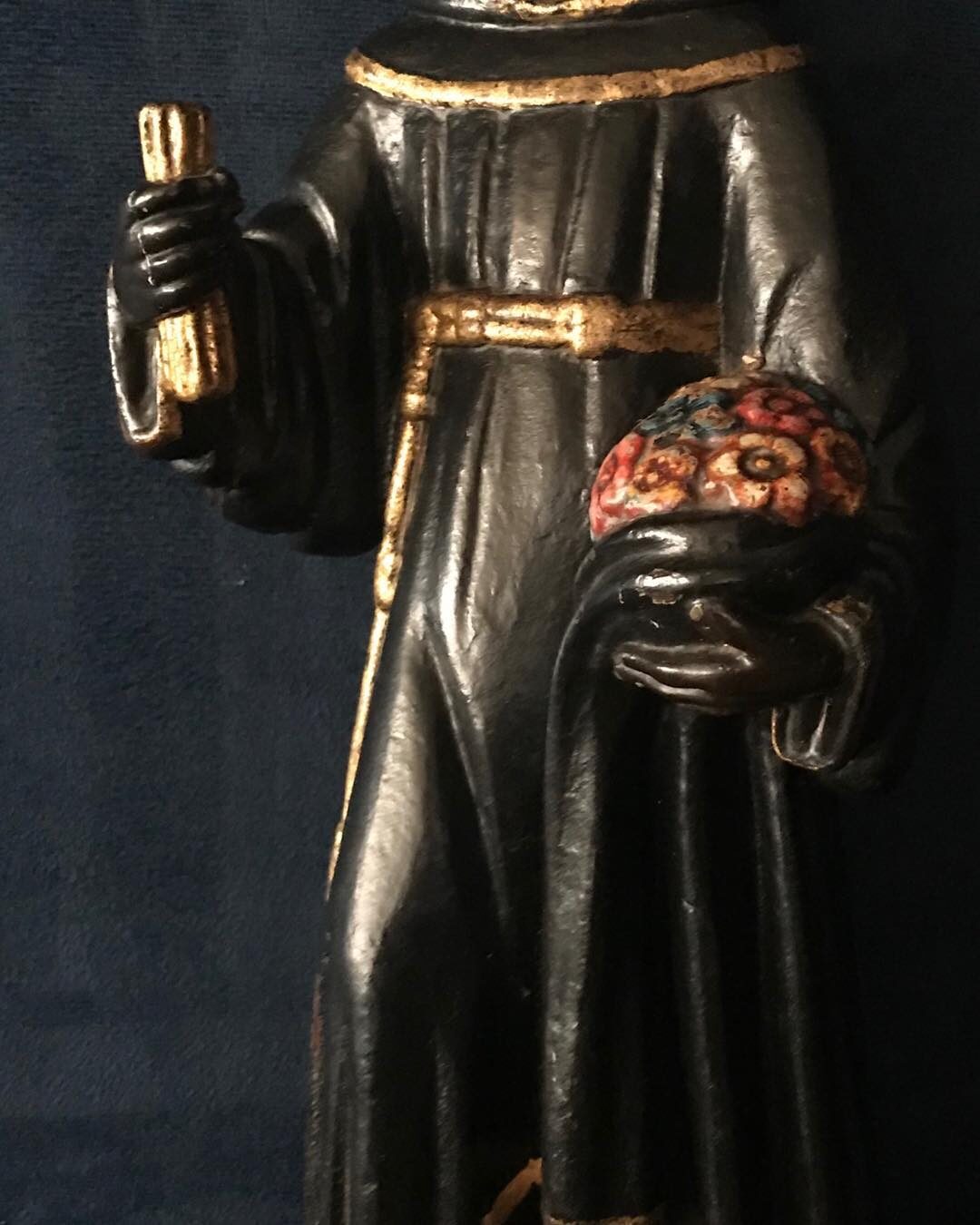
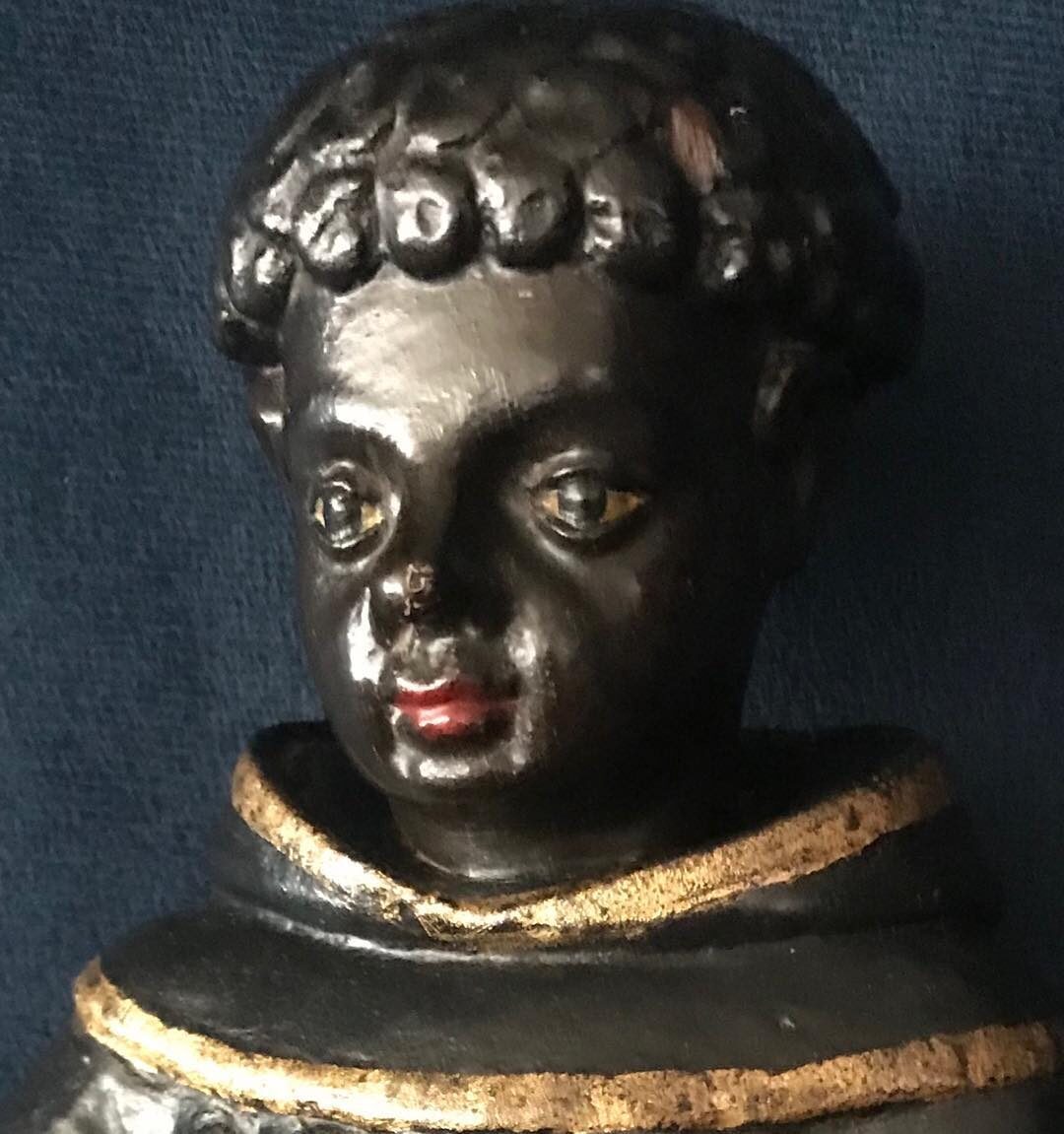
On a rectangular base with rounded corners, a sculpture of great sobriety. The black saint wears the Franciscan habit, picked out in gold on details of the hood, the cord, the hem and the attributes he carries. His expression is serene, with a faint smile and curling hair in monastic tonsure.
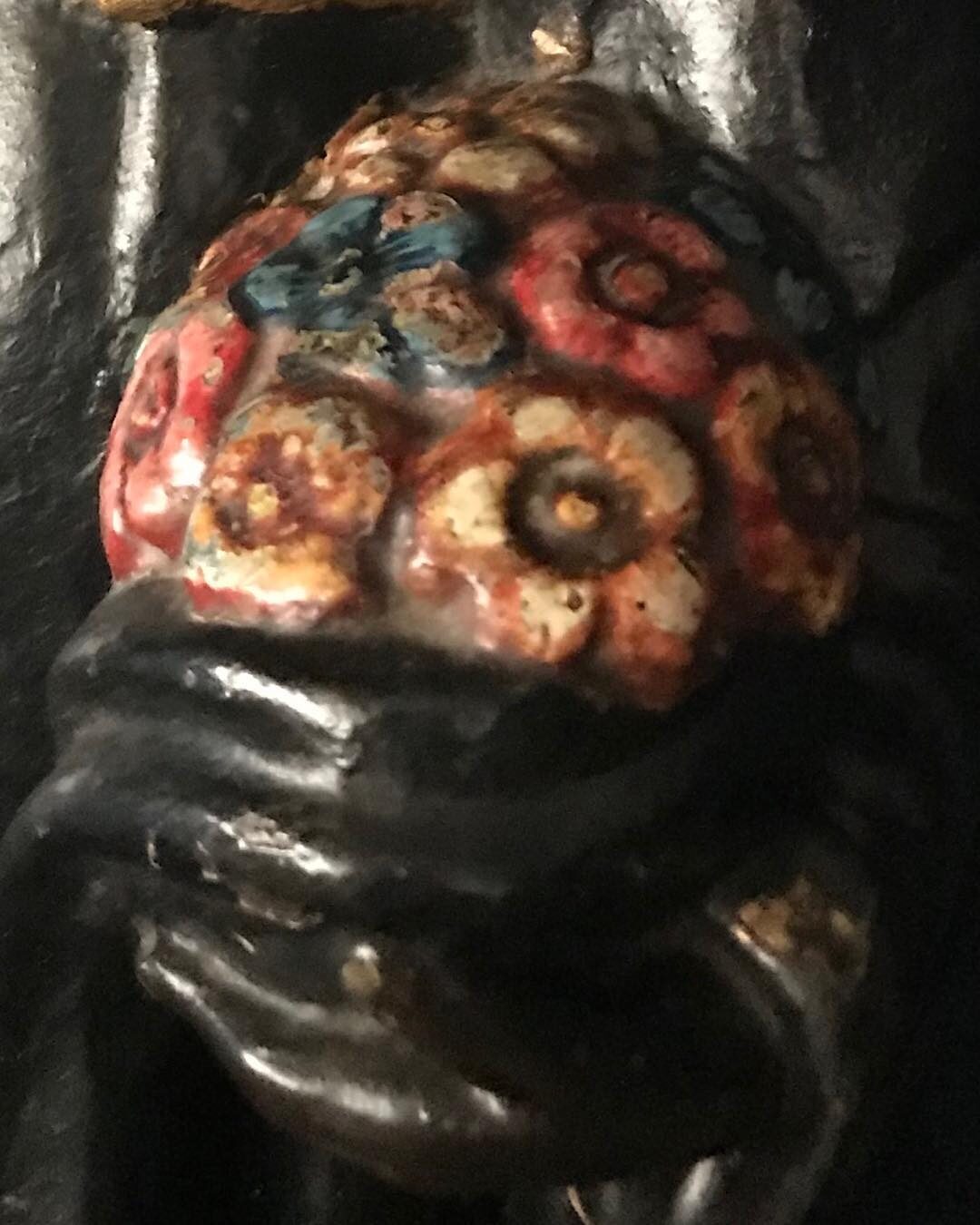
In one hand, a rolled napkin; in the other, a folded portion of the habit holding a bouquet of flowers — one of his most popular attributes in seventeenth-century Portuguese iconography. The devotion is known as Saint Benedict of the Flowers and derives from the tradition that he was cook of the convent where he lived. Warned not to give the friars' bread away as alms, he was caught doing so; asked what he carried hidden in his habit, he opened it, and the bread had turned to flowers.
Benedict, a name meaning blessed, was born in a Sicilian village to parents enslaved from Ethiopia; the son was born free. He never learned to read or write, and yet taught theologians and masters. In Brazil this model began to circulate in the seventeenth and eighteenth centuries and spread through the regions that received the most Africans — a well-known example stands on the side altar of the church of Nossa Senhora do Rosário dos Homens Pretos, in the Pelourinho.
Price on request